Webinar
The Business Lifecycle: Tax Planning for Business Owners
Plays from YouTube in privacy-enhanced mode. The player only loads when you press play.
The Business Lifecycle: Tax Planning for Business Owners
In brief
- A business passes through stages, and the tax issues change at each one.
- The main stages are start-up, growth, extracting profit, protecting value and exit.
- Decisions made early, such as how the company is owned, shape the options later.
- A plan that is reviewed each year is more useful than a single set of advice.
Start-up
At the start, the owner chooses a structure. A sole trader pays income tax on profits. A company pays corporation tax at between 19% and 25% and the owners take salary, dividends or both. The choice affects National Insurance, how losses are used, and what can be done later. Record-keeping, VAT registration and the tax treatment of start-up costs also need attention.
Growth
As the business grows, profits rise and so does the tax on them. Owners often look at reliefs for investment, such as capital allowances, and for innovation, such as R&D tax credits. See our page on R&D tax credits. Taking on investors may involve EIS or SEIS, which give relief to investors. New hires, share schemes and property purchases each carry tax questions.
Taking money out
Owners take profits as salary, dividends, pension contributions and loan repayments. The best mix depends on the tax rate of the company and the individual. Leaving profits in the company can defer personal tax, but large retained cash balances can create issues for reliefs that depend on trading status.
Protecting value
Once the business has value, owners may separate assets from risk, for example by putting trading activities under a holding company and property or cash into a separate company. See our pages on holding companies and the business lifecycle. Family members can be brought in as shareholders where it is commercial to do so.
Succession and exit
An exit can take the form of a sale to a third party, a management buy-out, a sale to an Employee Ownership Trust or a gradual hand-over to the next generation. Business Asset Disposal Relief reduces the tax rate on qualifying gains to 18% on the first £1 million, falling to a £500,000 lifetime limit for disposals from 6 April 2027. Inheritance Tax reliefs on business assets are limited to a total of £2.5 million at 100% from 6 April 2026.
Frequently asked questions
When should I start planning my exit?
Often several years ahead, since some reliefs depend on ownership periods and trading status.
Do I need a holding company from day one?
Not necessarily. It can be added later through a share exchange, with the right steps.
Does the stage of the business change how I am taxed?
The rules stay the same, but the available planning changes as the business changes.
If you would like to talk this through for your own situation, please book a free call with our team.
Business Owners
Want this applied to your situation?
Book a call with our team. Every plan is reviewed by a Chartered Tax Adviser, from the first call to the finished advice. We reply the same working day.
More from the library
All on business owners- Case 25 · Business ownersTax Due Diligence for a Private Equity Investment in a UK Technology BusinessA private equity investment house asked our team to review the tax position of a UK technology business it planned to invest in. The window was tight and the information arrived in stages. This is how we handled it.3 min read
- Case 27 · Business ownersThird-Party Sale of an Environmental Engineering Company for £13.5mThe shareholders of an owner-managed environmental engineering company agreed to sell to a third party for £13.5m. The price was paid partly in cash, partly in deferred consideration including loan notes, and partly by r3 min read
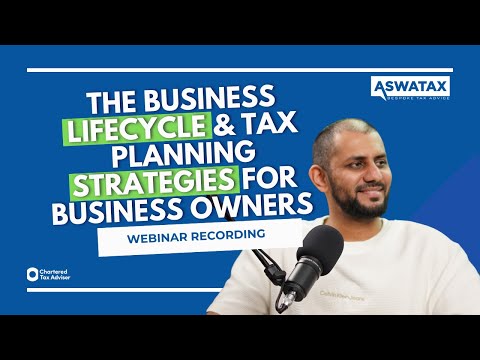 WebinarBusiness ownersThe Business Lifecycle & Tax Planning Strategies for Business Owners Part 2